
Challenge
Teriparatide, a recombinant PTH (1-34) fragment used in osteoporosis therapy, is a short peptide that can be difficult to express and recover efficiently. The program required building production strains for the 34-mer, evaluating fusion partner designs in a high-throughput parallel screen, and establishing a recovery strategy to support clinical evaluation, biosimilar comparability assessment and commercial manufacturing.
Strategies Employed
- Inducible promoter and RBS tuning to drive higher expression while maintaining strain robustness
- Screen an array host strains including folding enhancer over expression and protease inactivation strains to improve peptide quality
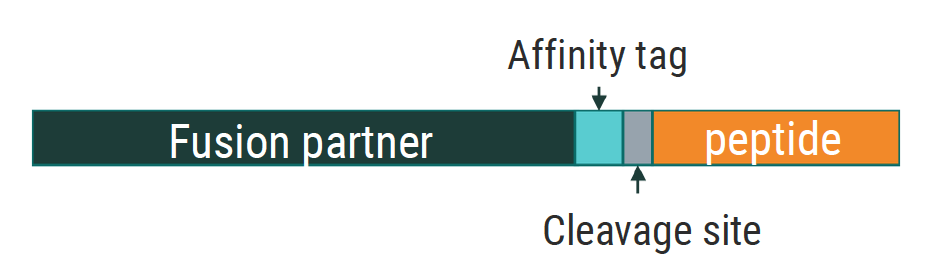
- High-throughput fusion partner screening with cleavable affinity tag used to identify constructs delivering the highest peptide production
Results
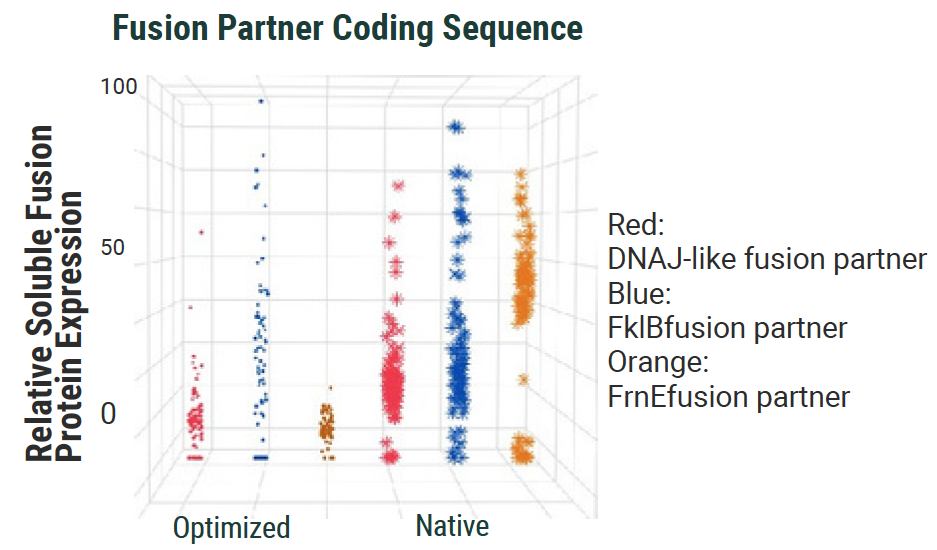

- Multiple native fusion partners performed well in screening
- Optimization of fusion partner gene sequence not needed
- FklB fusion expressed at >6g/L in initial scale-up, enabling easy recovery and cleavage
- Titer was further improved in process development
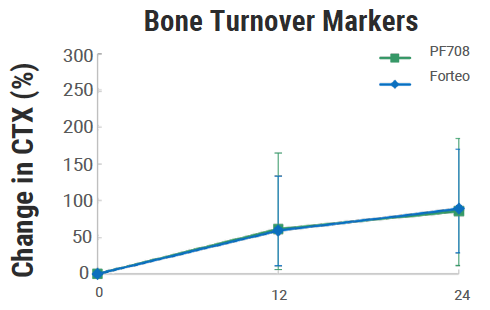
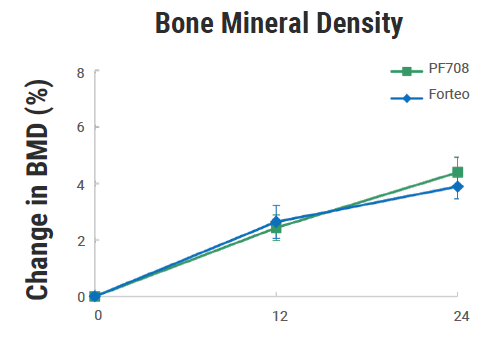
Phase 3 (PF708-301) study comparing PF708 and Forteo in osteoporosis patients demonstrated comparable overall profiles across multiple endpoints, including:
- No imbalances in severity or incidence of adverse events
- No clinically or statistically significant differences in immunogenicity, bone mineral density and bone turnover markers
Conclusion
Fusion construct screening provided actionable insights for selecting teriparatide strains exceeding 6 g/L expression. An engineered affinity tag and defined cleavage site supported downstream capture and release of the active peptide, informing process development for future clinical and commercial production.